
Updated provincial wildfire-smoke guidance is drawing attention to a less visible problem in Okanagan homes: outdoor smoke can enter through openings in the building envelope even when windows and doors remain closed and the air conditioning is operating.
In an Aug. 12 information bulletin, the B.C. Ministry of Health advised residents to reduce their exposure by creating a cleaner-air space at home. Recommended measures include closing windows and doors and using portable air cleaners or HVAC filtration, provided indoor temperatures remain safe. The ministry said wildfire smoke can cause coughing, wheezing, headaches and irritation and may worsen existing heart and lung conditions.
Health Canada’s July 17 guidance, “Wildfire smoke, air quality and your health: Preparing for wildfire smoke events,” recommends properly sized portable air cleaners and the highest-quality filter a household ventilation system can accommodate. These measures can reduce smoke particles indoors, but they do not identify how outside air is entering the building.
Thrive Energy Inc., an Okanagan building-performance and energy advisory company, reports receiving individual inquiries from homeowners in Kelowna, West Kelowna and Kamloops who noticed smoke odours indoors despite keeping their homes closed. These reports are anecdotal and are not based on a formal survey or compiled regional dataset.
“Closed windows address only the openings homeowners can see,” said Brett Tracy, founder and Registered Energy Advisor at Thrive Energy. “Air can still travel through concealed gaps and connections throughout the building envelope.”
Pressure differences caused by wind, indoor-to-outdoor temperature differences and household exhaust equipment can move air through those openings. Bathroom fans, clothes dryers and range hoods remove indoor air while operating. Replacement air must then enter the house from outdoors or connected spaces such as an attic, garage or crawl space.
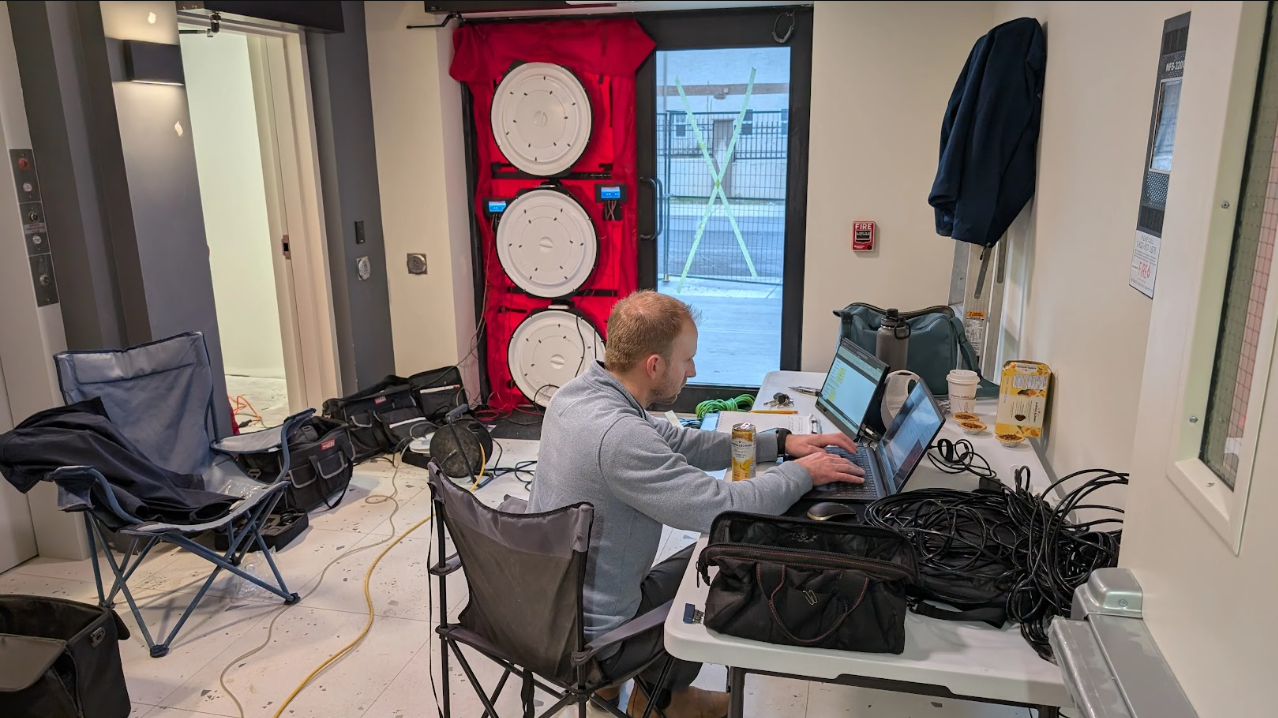
A blower door test can help locate uncontrolled air pathways. The equipment uses a calibrated fan installed in an exterior doorway to create a controlled pressure difference. While the fan operates, a trained professional can use diagnostic tools such as a smoke pencil and, under suitable conditions, thermal imaging to identify where air is entering.
Common leakage points are not always visible during a routine inspection. In older Okanagan homes, air may move through unsealed attic hatches, recessed lighting, plumbing and wiring penetrations, wall-to-floor connections, exterior dampers and gaps between an attached garage and the living space. Testing under controlled pressure can help distinguish minor drafts from larger leakage pathways and provide a prioritized plan for further investigation or repair.
The test measures overall airtightness and helps identify leakage areas, but it does not measure indoor smoke particles or determine whether the air is medically safe. Residents should continue following public-health advice, monitor the Air Quality Health Index and seek medical assistance when concerning symptoms develop.
“Filtration and air sealing serve different purposes,” Tracy said. “Filtration helps remove particles from indoor air, while air sealing reduces uncontrolled entry routes. The long-term objective is to control where outdoor air enters, filter it appropriately and make sure ventilation and combustion safety are considered together.”
Homeowners should not block combustion-air openings or seal plumbing and mechanical vents without confirming their purpose with a qualified professional. Incorrectly closing required openings can create carbon-monoxide, moisture, ventilation or drainage hazards.
During severe smoke, immediate measures may include creating one cleaner-air room, using a suitable portable air cleaner, maintaining HVAC filters and limiting unnecessary use of powerful exhaust fans. Once conditions improve, a building-envelope assessment can help determine whether targeted air sealing should form part of a longer-term plan.
Additional information about Thrive Energy Inc. and its building-performance and airtightness-testing services is available at thriveenergyinc.com.
###
For more information about Thrive Energy Inc, contact the company here:
Thrive Energy Advisors
Brett Tracy
+1 778-867-0242
office@thriveengyinc.com
1894 Rosealee Ln, West Kelowna, BC V1Z 4C7

 Login
Login